Boat Flooring Options Beyond Carpet: What Actually Lasts in Florida
KEY TAKEAWAYS
- Marine carpet fails quickly in Florida due to UV exposure, salt water penetration, and heat cycling that causes adhesive breakdown within 2-3 years
- Closed-cell PE foam offers superior durability with 100% stain resistance and 8+ year lifespan, while EVA foam degrades faster under Florida sun exposure
- Teak requires constant maintenance in Florida's climate and can reach dangerous temperatures, making it impractical for most boat owners
- Professional installation with precision measurement and CNC cutting prevents the common failure points that plague DIY flooring projects
Boat flooring in Florida faces conditions that destroy most materials within a few seasons. The combination of intense UV exposure, salt water, and extreme heat cycling creates a testing ground where only specific materials and installation methods survive long-term use.
Most boat owners start with marine carpet because it's familiar and initially affordable. But Florida conditions expose the fundamental problems with carpet-based systems faster than anywhere else in the country. Understanding why materials fail – and which alternatives actually work – can save thousands in repeated replacements. Custom foam flooring patterns represent one solution that addresses these specific failure modes through material selection and precision installation.
Why Marine Carpet Fails in Florida Waters
Marine carpet seems like a logical choice until you understand what happens below the surface. The backing material absorbs moisture despite waterproof claims, creating a breeding ground for mold and mildew. In Florida's heat, this trapped moisture accelerates adhesive breakdown.
Salt water makes the problem worse. Salt crystals form as water evaporates, creating an abrasive layer that cuts carpet fibers and prevents proper drying. The constant wet-dry cycle causes the backing to separate from the deck surface, usually starting at high-traffic areas like the transom and helm.
UV exposure fades the surface color within months, but the real damage happens to the adhesive system. Florida sun breaks down the chemical bonds that hold carpet to the deck, leading to bubbling, peeling, and eventual complete failure. Most marine carpet installations last 18-24 months before requiring replacement.
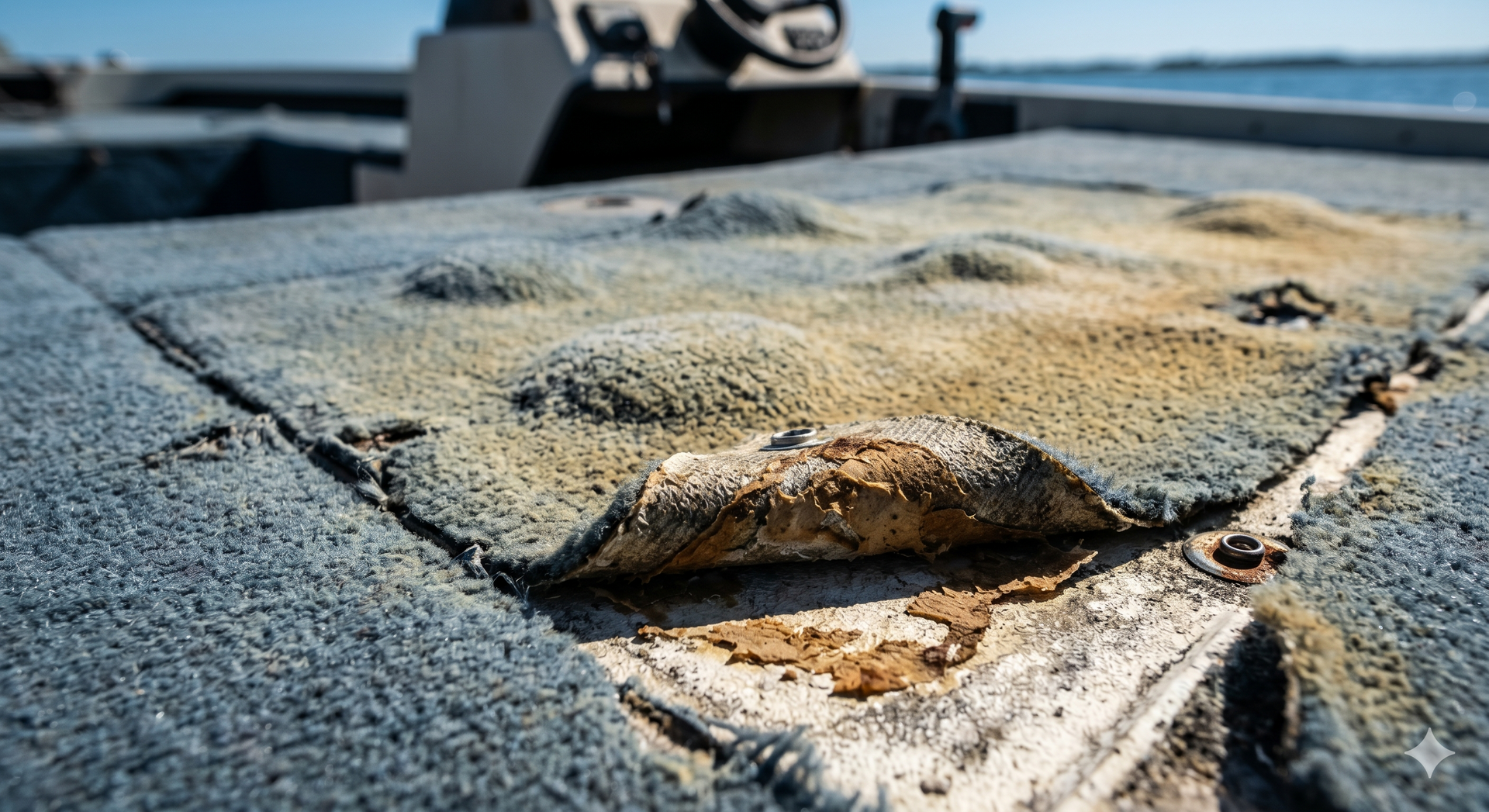
The replacement cycle becomes expensive quickly. Factor in removal costs, surface preparation, and new material, and many boat owners spend more on carpet replacements over five years than they would on a permanent solution.
Vinyl Flooring: Better But Not Perfect
Marine vinyl addresses some of carpet's problems but creates new ones. Quality vinyl resists water penetration and cleans easily, making it popular for center consoles and fishing boats. The surface stays cooler than other hard materials, and modern textures provide decent traction when wet.
Installation quality determines vinyl's lifespan more than the material itself. Seams represent the primary failure point – if water penetrates the edges, it travels underneath and causes adhesive failure similar to carpet. Professional installation with heat-welded seams eliminates this problem, but adds significant cost.
UV resistance varies dramatically between vinyl products. Lower-grade materials fade and become brittle within two years in Florida sun. Marine-grade vinyl with UV stabilizers lasts longer but still requires replacement every 4-5 years under constant exposure.
The biggest limitation is comfort. Vinyl provides no cushioning, making it uncomfortable for extended periods on deck. This matters more on boats used for leisure rather than pure fishing applications.
Traditional Teak: Beautiful But High-Maintenance
Teak remains the gold standard for appearance and durability, but Florida conditions make maintenance requirements impractical for most boat owners. Real teak can last decades with proper care, but "proper care" means monthly cleaning, regular oiling, and periodic sanding to prevent splitting.
Heat becomes a serious problem with teak decking in Florida. Dark wood absorbs solar energy and can reach temperatures exceeding 140°F on summer afternoons. This makes the deck unusable without shoes and can cause burns on contact.
Salt water accelerates teak's natural weathering process. Without regular maintenance, the wood turns gray and develops deep cracks that trap dirt and salt. Once cracking begins, water penetration leads to rot in the substrate below the teak.
Cost represents another barrier. Quality teak installation runs $15-25 per square foot before labor, making it the most expensive option upfront. Add ongoing maintenance costs, and teak becomes prohibitive for most recreational boat owners.
Synthetic Teak Alternatives
Synthetic teak products attempt to capture wood's appearance without the maintenance requirements. Modern versions look convincing and provide better traction than real wood when wet. They resist UV damage and require only basic cleaning to maintain appearance.
Performance varies significantly between manufacturers. Lower-quality synthetic teak fades unevenly and develops a plastic appearance within a year. Better products maintain color consistency but cost nearly as much as real teak.
Installation challenges mirror those of vinyl flooring. Seam quality determines long-term performance, and most synthetic teak requires professional installation to achieve acceptable results. DIY installations typically fail at the edges where water penetration occurs.
Heat retention remains an issue with most synthetic materials. While not as extreme as real teak, synthetic alternatives still become uncomfortably hot in direct Florida sun.
EVA Foam: Popular But Problematic
EVA (ethylene vinyl acetate) foam gained popularity through marine retailers and online marketplaces. The material feels comfortable underfoot and installs easily with peel-and-stick backing. Initial cost stays low, making it attractive for budget-conscious boat owners.
Florida conditions expose EVA foam's limitations quickly. The material degrades under UV exposure, becoming brittle and prone to tearing. Salt water accelerates this process, causing the foam to break down at the molecular level.
Adhesive failure represents one of the most common problems with EVA foam installations. The peel-and-stick backing works initially but loses adhesion as temperatures cycle between hot days and cooler nights. Edges lift first, allowing water underneath that spreads the failure across the entire installation.
EVA Foam poses a high risk for Light Amplification. Light amplification occurs when sunlight reflects and intensifies off surrounding surfaces—particularly water, polished gel coat and glass—creating concentrated heat on specific areas of a boat’s flooring. In marine environments, this amplified heat can cause traditional EVA foam flooring products to overheat, leading to excessive surface temperatures, discoloration, expansion, adhesive breakdown, and premature failure. This is especially common in high-exposure areas such as swim platforms, helm pads, bow seating areas, and locations near reflective hardtops or windshield systems. Because boats are constantly exposed to intense UV and reflective heat from multiple angles, marine flooring must be specifically engineered to withstand these conditions. Choosing flooring designed to resist light amplification is critical to maintaining long-term comfort, appearance, adhesion, and overall product performance.
Cleaning is HARD from the START with EVA foam because it is not 100% closed cell. The surface develops a rough texture that traps dirt and salt, requiring aggressive scrubbing that accelerates wear. Most EVA installations need replacement within 2-3 years in Florida conditions.
Cleaning EVA foam is a constant battle from the very beginning because it is not truly closed-cell. Its porous surface absorbs and traps dirt, salt, fish blood, sunscreen, grease, and other stubborn marine contaminants deep into the material making simple wash downs ineffective. The aggressive cleaning needed, only accelerates surface breakdown, leaving the foam rougher, more worn, and even harder to clean over time. In Florida’s harsh heat, UV exposure, and saltwater conditions, EVA foam frequently becomes stained, faded, and tired-looking far sooner than most boat owners expect. Most EVA installations need replacement within 2-3 years in Florida conditions.
PE Foam: The AWC - Florida Solution
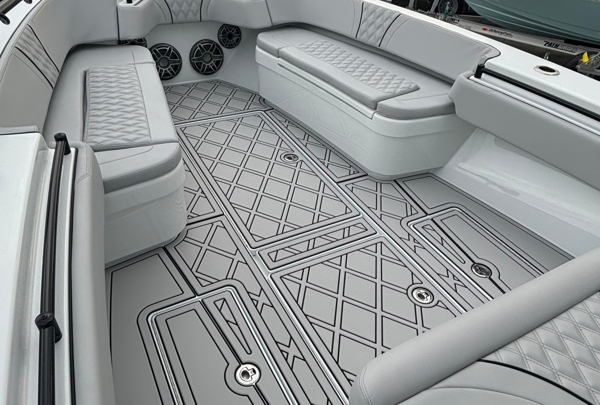
All Water Customs uses PE Foam to protect your investment. Closed-cell polyethylene (PE) foam addresses the specific failure modes that destroy other materials in Florida conditions. The closed-cell structure prevents water penetration completely, eliminating the moisture-related problems that plague carpet and open-cell foams.
UV resistance comes from material formulation rather than surface coatings. Quality PE foam maintains flexibility and color stability under constant sun exposure. The material doesn't become brittle like EVA foam or require regular treatment like teak.
Salt water has no effect on properly formulated PE foam. The material won't absorb salt crystals or suffer chemical degradation from exposure to marine environments. This makes it ideal for boats that spend time in saltwater or get trailered between fresh and salt water.
Comfort matches or exceeds other cushioned options while maintaining durability. PE foam provides consistent cushioning that doesn't compress permanently over time. The surface stays cooler than hard materials but doesn't retain heat like darker alternatives.
Stain resistance is absolute with closed-cell construction. Fish blood, sunscreen, drinks, and other common boat spills clean off with basic soap and water. The material won't absorb odors or discolor from exposure to common marine chemicals.
Installation: Why Precision Matters
Material selection only matters if installation eliminates common failure points. Most flooring problems trace back to poor measurement, inadequate surface preparation, or field modifications that compromise fit.
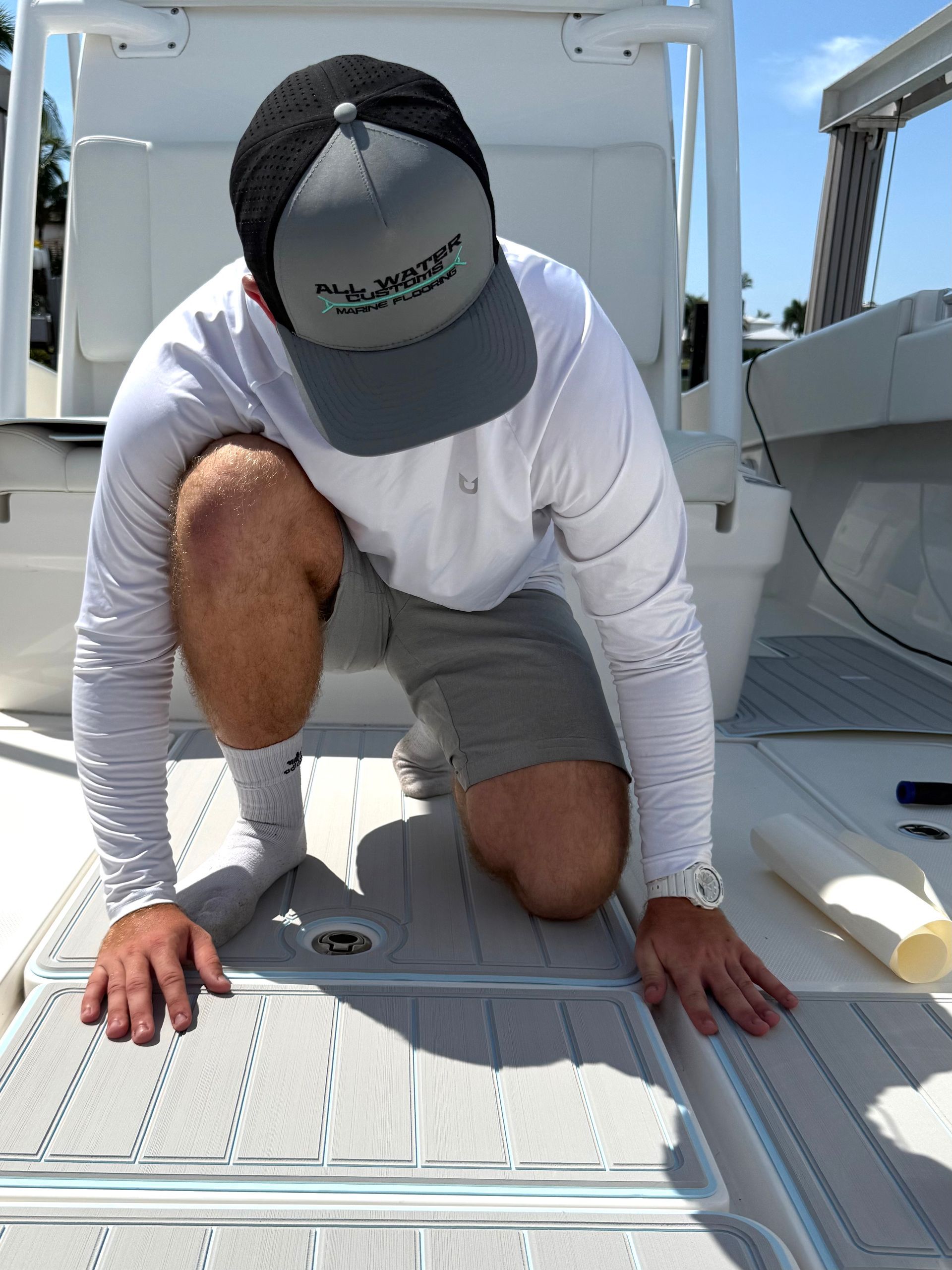
Professional installation starts with precise measurement using digital tools rather than templates. Every curve, angle, and obstruction gets captured in CAD files that drive CNC cutting equipment. This eliminates the guesswork and field trimming that create gaps where water can penetrate.
Surface preparation determines adhesive performance more than adhesive type. Proper preparation removes all traces of old adhesive, oils, and contaminants that prevent new adhesive from bonding. This step gets skipped in DIY installations, leading to premature failure.
Professional boat flooring installation includes material selection based on specific use patterns and environmental exposure. A fishing boat used in shallow saltwater flats needs different materials and installation methods than a pleasure boat used primarily in freshwater lakes.
Cost Analysis: Upfront vs Long-Term Value
Initial material costs don't reflect true ownership expenses when replacement cycles vary dramatically between options. Marine carpet might cost $3-5 per square foot initially, but requiring replacement every two years makes it expensive over time.
Quality PE foam installations typically cost $8-12 per square foot including professional installation. The higher upfront cost gets offset by 8+ year lifespan and minimal maintenance requirements. No replacement costs for nearly a decade changes the economic calculation significantly.
Labor costs for removal and reinstallation add up quickly with short-lived materials. Removing failed carpet or vinyl requires scraping old adhesive and surface preparation before new material can be installed. This process costs almost as much as the initial installation.
Professional installation with precision measurement and proper materials eliminates callbacks and warranty issues. A flooring system that's done right the first time costs less than multiple attempts with cheaper materials and methods.
Maintenance Requirements by Material Type
Different materials require vastly different maintenance approaches to achieve their expected lifespan. Understanding these requirements upfront helps boat owners choose materials that match their maintenance preferences and capabilities.
Marine carpet requires regular deep cleaning to prevent mold and mildew growth. This means professional cleaning every 6-8 weeks during active boating season, plus immediate attention to spills and stains. Even with perfect maintenance, carpet replacement becomes necessary within 2-3 years in Florida.
Vinyl flooring needs weekly cleaning with marine-specific cleaners to prevent buildup of salt and sunscreen residue. Seams require inspection and occasional resealing to prevent water penetration. Quality vinyl installations can last 4-5 years with proper maintenance.
Teak demands monthly cleaning with specialized teak cleaners, followed by oiling every 2-3 months. Annual sanding may be necessary to maintain appearance and prevent splitting. Skip any part of this routine and the wood deteriorates rapidly in Florida conditions.
PE foam requires only basic cleaning with soap and water. No special products, no regular treatments, no professional maintenance. The material maintains appearance and performance with minimal effort throughout its 8+ year lifespan.
✔ Florida Flooring Reality Check: After eight years of testing different materials in Florida conditions, the data is clear: closed-cell PE foam outlasts alternatives by 3-4x while requiring virtually no maintenance. The higher upfront cost pays for itself through elimination of replacement cycles that plague other materials.
Climate-Specific Considerations for Florida Boats
Florida's marine environment creates unique challenges that don't exist in northern climates. Understanding these factors helps explain why materials that work elsewhere fail quickly in Florida waters.
UV intensity in Florida exceeds most other boating regions by 30-40%. This accelerated exposure breaks down materials and adhesives faster than manufacturer testing typically accounts for. Materials need UV stabilizers specifically formulated for extreme exposure conditions.
Temperature cycling between 95°F+ days and 70°F nights stresses adhesive bonds continuously. Materials expand and contract at different rates, creating shear forces that cause delamination over time. Successful installations account for this movement in material selection and installation methods.
Humidity levels above 80% for months at a time prevent proper drying of porous materials. This creates ideal conditions for mold, mildew, and bacterial growth in any material that absorbs moisture. Only completely closed systems avoid these biological problems.
Salt concentration varies dramatically between Gulf Coast, Atlantic, and inland waters. Materials that perform well in freshwater lakes may fail quickly when exposed to full-strength seawater. Choosing the right boat flooring installer in Florida means working with someone who understands these regional differences.
Making the Right Choice for Your Boat
The best flooring choice depends on how you use your boat, where you use it, and how long you plan to keep it. A boat used primarily for fishing needs different characteristics than one used for family recreation or entertaining.
High-traffic areas like the cockpit and transom need maximum durability and stain resistance. These areas see the most abuse from fish, bait, and equipment. Comfort becomes secondary to easy cleanup and long-term durability.
Social areas benefit from comfort and appearance while still requiring practical maintenance characteristics. The material needs to look good and feel comfortable underfoot while standing up to sunscreen, drinks, and general foot traffic.
Budget considerations should include total cost of ownership rather than just initial installation cost. A material that lasts twice as long while requiring less maintenance often costs less over time despite higher upfront expense.
Professional Installation vs DIY Approaches
Installation method affects material performance regardless of which option you choose. Even the best materials fail when installed incorrectly, while proper installation can extend the life of marginal materials.
DIY installation works for temporary solutions or boats that won't see heavy use. Simple peel-and-stick applications can provide 1-2 years of service with minimal investment. But expect replacement to be necessary sooner rather than later.
Professional installation becomes cost-effective when you factor in material waste, tool requirements, and the cost of fixing mistakes. Precision measurement and cutting eliminate the gaps and overlaps that cause premature failure in DIY projects.
Warranty coverage often depends on professional installation. Material warranties typically exclude damage from improper installation, leaving DIY installers responsible for premature failures that might be covered under professional installations.
Getting Started with Your Flooring Project
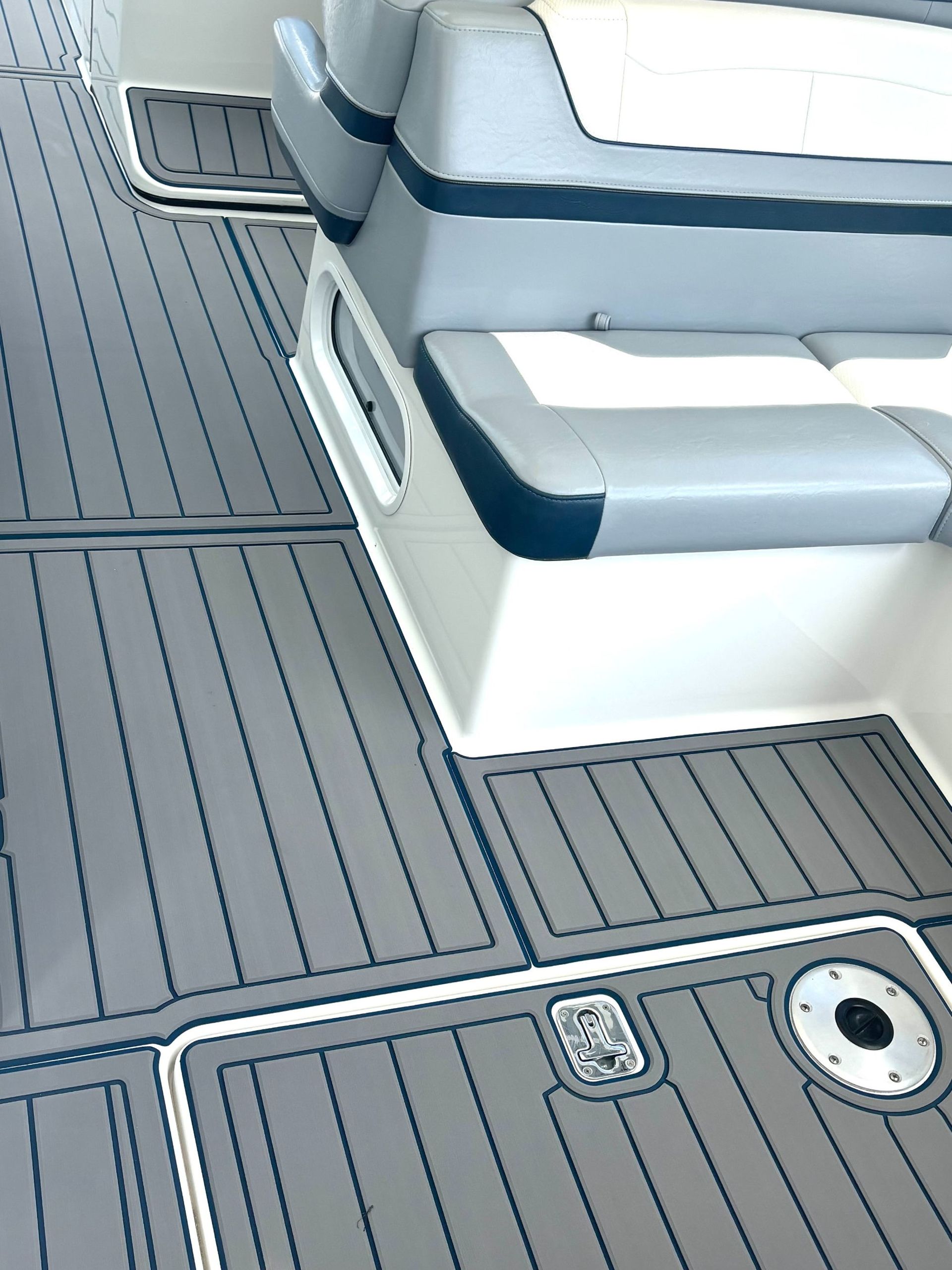
The difference between flooring that lasts eight years and flooring that needs replacement in two years often comes down to proper material selection and installation precision. Florida conditions don't forgive shortcuts or compromises in either area.
Quality materials installed correctly cost more upfront but eliminate the frustration and expense of repeated failures. A flooring system done right the first time lets you focus on using your boat instead of maintaining it.
Professional measurement and installation ensure proper fit and eliminate the common failure points that plague DIY projects. Schedule a free measurement to see how precision installation creates flooring systems that last in Florida conditions.
Frequently Asked Questions
How long does PE foam actually last compared to marine carpet in Florida conditions? Closed-cell PE foam typically lasts 8+ years in Florida's UV and salt water conditions, while marine carpet usually needs replacement every 18-24 months. The closed-cell structure prevents water penetration and UV degradation that destroys other materials. PE foam maintains its flexibility and appearance throughout its lifespan without the bubbling, peeling, and mold issues common with carpet.
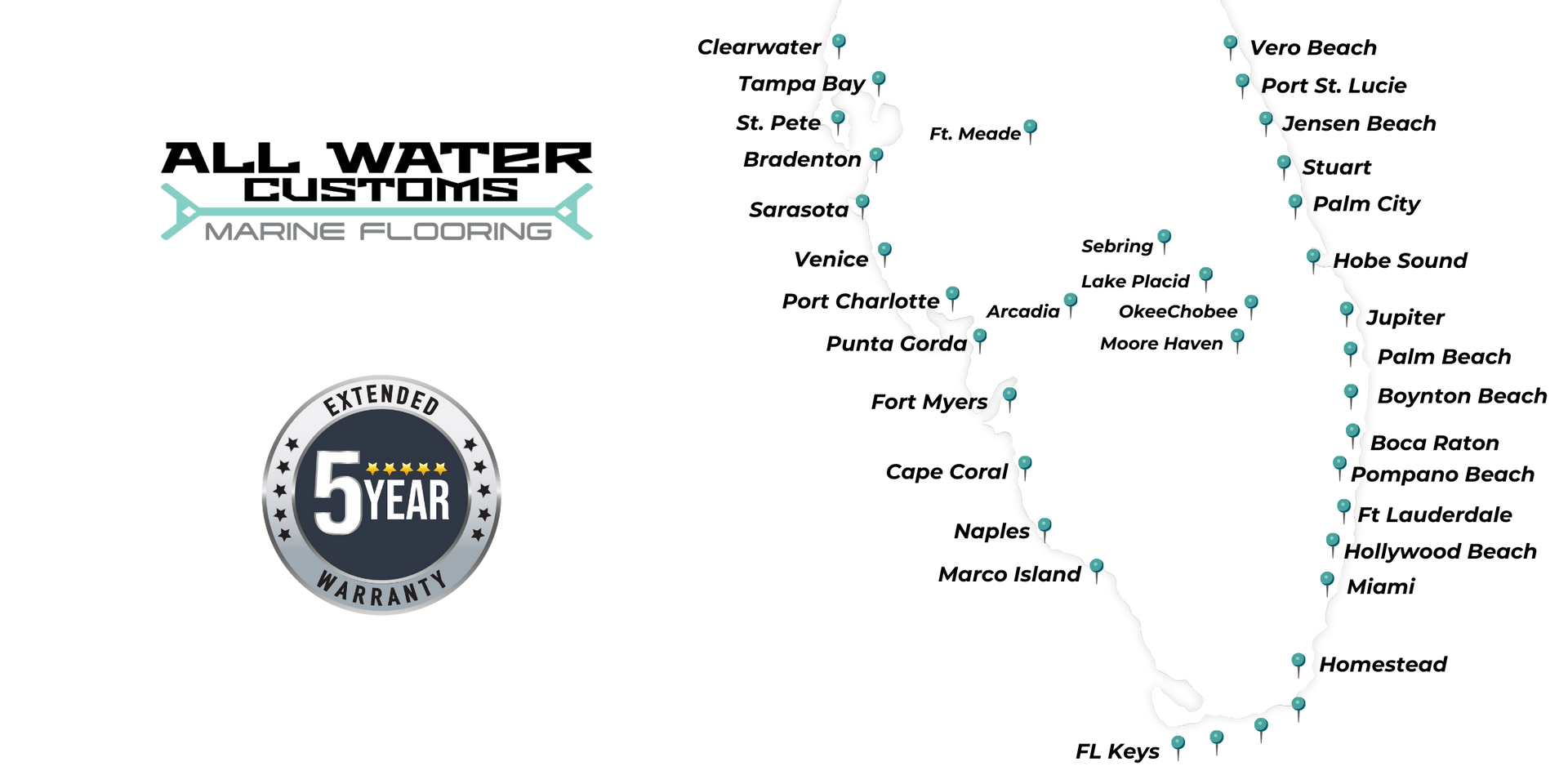
What's included in the 5-year warranty and what specific problems does it cover? The 5-year warranty explicitly covers UV/light amplification damage and adhesive breakdown – the two most common failure modes in Florida conditions. This comprehensive coverage protects against the environmental factors that typically destroy boat flooring. The warranty reflects confidence in both material selection and installation precision.
Why does the installation take 3 to 3.5 weeks when other options seem faster? The timeline reflects precision measurement, CAD design, and CNC cutting of every piece before installation begins. This eliminates on-deck cutting and trimming that creates gaps where water can penetrate. The extra time upfront prevents the premature failures that require complete reinstallation within a few years.
How much should I expect to pay for PE foam flooring on my boat? Most projects range around $4,000, with total costs between $2,500 to $10,000+ depending on boat size, layout complexity, foam thickness, and design customization. Exact pricing requires in-person measurement since every boat's geometry is different. The higher upfront cost eliminates replacement cycles that make cheaper materials expensive over time.
Is PE foam really 100% stain resistant or will it eventually absorb fish blood and sunscreen? The closed-cell structure makes PE foam completely non-porous, so liquids cannot penetrate the surface. Fish blood, sunscreen, drinks, and other spills clean off with soap and water without leaving stains or odors. Unlike carpet or open-cell foams, there's no absorption that leads to permanent discoloration or bacterial growth.
What happens if I need to remove the flooring later for hull repairs or modifications? Professional installation methods allow for removal when necessary for boat modifications or repairs. The precision-cut pieces and proper adhesive selection make removal cleaner than carpet or vinyl installations. However, the 8+ year lifespan means most owners complete any major boat modifications before flooring installation.
How does PE foam compare to EVA foam that I see advertised online? PE foam maintains durability and flexibility under UV exposure while EVA foam becomes brittle and tears within 2-3 years in Florida conditions. EVA's peel-and-stick backing typically fails as temperatures cycle, causing edges to lift and water penetration. PE foam's superior UV resistance and adhesive system provide much longer service life.
Do I need to do anything special to maintain PE foam flooring? PE foam requires only basic cleaning with soap and water – no special products, treatments, or professional maintenance needed. The material won't absorb salt, develop mold, or require the regular deep cleaning that carpet demands. This minimal maintenance requirement is part of what makes the total cost of ownership lower than other options.