Fishing Boat Flooring in Florida: What Holds Up to Blood and Bait
KEY TAKEAWAYS
- Closed-cell PE foam is the practical choice for fishing boats because the material is 100% stain-resistant and non-porous, so blood, chum, squid ink, and bait juice sit on the surface instead of soaking in.
- Carpet and bare gelcoat both fail on fishing boats for the same reason: they hold liquid. Carpet traps it in fiber and backing. Gelcoat lets it sit in the non-skid texture until it stains or turns slick.
- A wash-down with a deck brush and boat soap handles most fishing days. No sanding, no sealing, no annual re-treatment.
Fishing boat flooring is the deck surface that has to survive blood, bait, scales, chum slop, dropped lead, and a cooler full of ice dragged across it twice a weekend. In Florida that same surface also sits in direct sun at 95 degrees, cools 30 degrees overnight, and gets hit with sea spray on every run. Most boat flooring is specified for how it looks at the dock. Fishing decks have to be specified for what happens at the cleaning station.
This article covers what actually holds up on a fishing platform in Florida: how closed-cell PE foam handles organic stains, how traction behaves when you are braced against the gunwale with a fish on, what cleanup looks like after a full offshore day, and how layout decisions change on a boat that gets worked instead of cruised.
Why Fishing Boats Destroy Flooring Faster Than Any Other Deck
Fishing boats fail flooring faster because the deck takes chemical, mechanical, and thermal abuse on the same day. Blood and bait residue are organic and acidic. Gaffs, pliers, jig heads, and dropped knives are point loads. The sun does the rest.
Carpet is the first thing most owners replace. The fiber wicks blood down into the backing and the plywood underneath, and once it dries in Florida heat, the smell stays. You can shampoo it. You cannot get it out of the substrate.
Bare gelcoat non-skid has a different failure mode. The diamond or sandpaper texture that gives you grip is also a trap. Blood dries in the valleys of that pattern and leaves a shadow. Over a few seasons of oxidation, the texture wears smooth in the high-traffic lanes, which is exactly where you stand when a fish runs.
Then there is heat. A dark gelcoat deck in a Florida July will burn bare feet inside ten minutes, and the daily heat cycling between an afternoon deck and a 3 a.m. run out works every adhesive bond on the boat. That is why adhesive is one of the two things we put in writing on our warranty, along with Light Amplification.
How Closed-Cell PE Foam Handles Fish Blood and Bait Stains
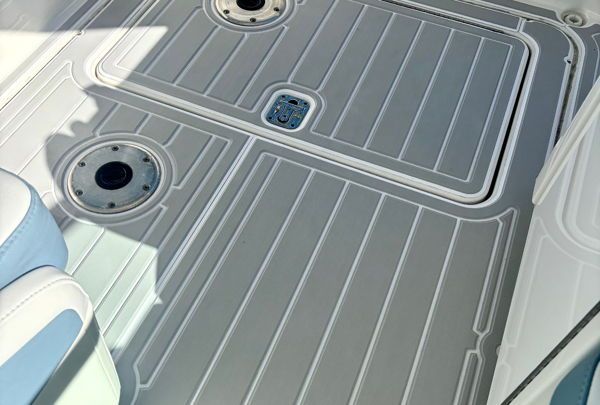
Closed-cell PE foam resists fish blood and bait stains because the cell structure is sealed. There is no open pore for liquid to enter, which is why the material is rated 100% stain-resistant. Blood, chum, menhaden oil, squid ink, and the orange slick left by a bucket of pilchards all sit on top of the surface.
That matters more than it sounds. On an absorbent deck, the clock starts the moment blood hits. You either rinse immediately or you own the stain. On closed-cell foam, a fish bleeding out on the deck during a run home is a cleanup task, not a permanent mark.
Sunscreen and bug spray behave the same way. So does hydraulic fluid from a jack plate, reel oil, and the diesel ring left by a jerry can. Those are the liquids that tell you whether a deck material is actually sealed or just marketed that way.
The sun side is separate from the stain side, and it is worth understanding before you pick a color. Light Amplification is what happens when sunlight reflects and concentrates on a surface, and it is the reason some decks look chalky and faded two seasons in. Our 5-Year Warranty names Adhesive and Light Amplification specifically. We are the only company that puts both of those in the warranty document, and every client gets that document in writing before installation day, not after.
Traction When You Are Casting and Fighting Fish
Traction on a fishing deck has to work in three states: dry, wet with sea water, and slick with fish slime. Those are different problems. Plenty of surfaces grip when dry and turn into a slip hazard the moment a redfish gets dragged across them.
Closed-cell PE foam holds traction wet because the grip comes from a tooled surface texture rather than from friction against a hard, polished substrate. The material also has give. When you plant your back foot against the gunwale and lean into a fish, the foam compresses slightly under your heel instead of letting it skate.
The second benefit shows up on a long day. A bay boat running chop transmits every impact straight into your knees and lower back through a hard deck. Foam absorbs a measurable amount of that. Anglers who stand for eight hours on a poling platform or casting deck notice it before they notice the color.
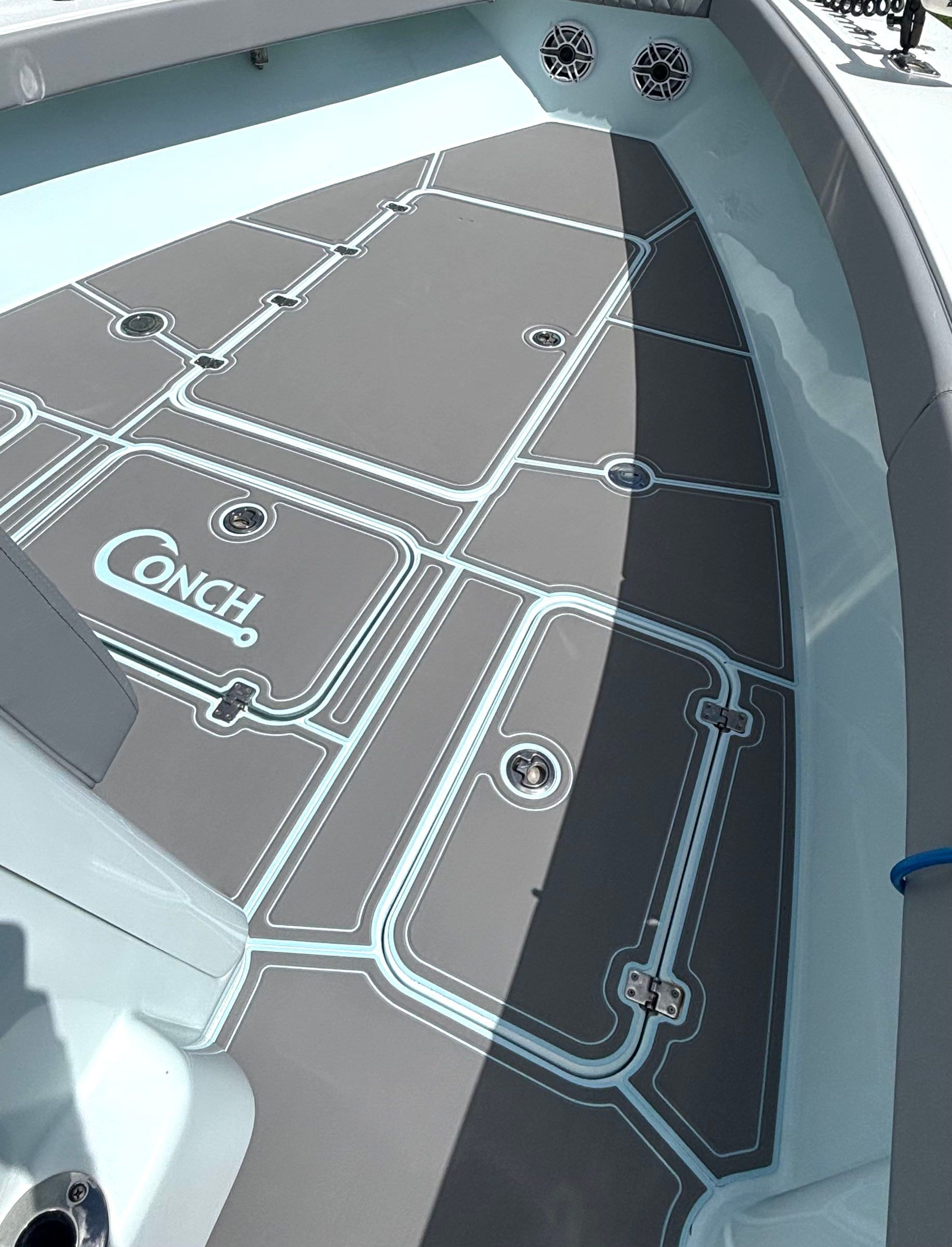
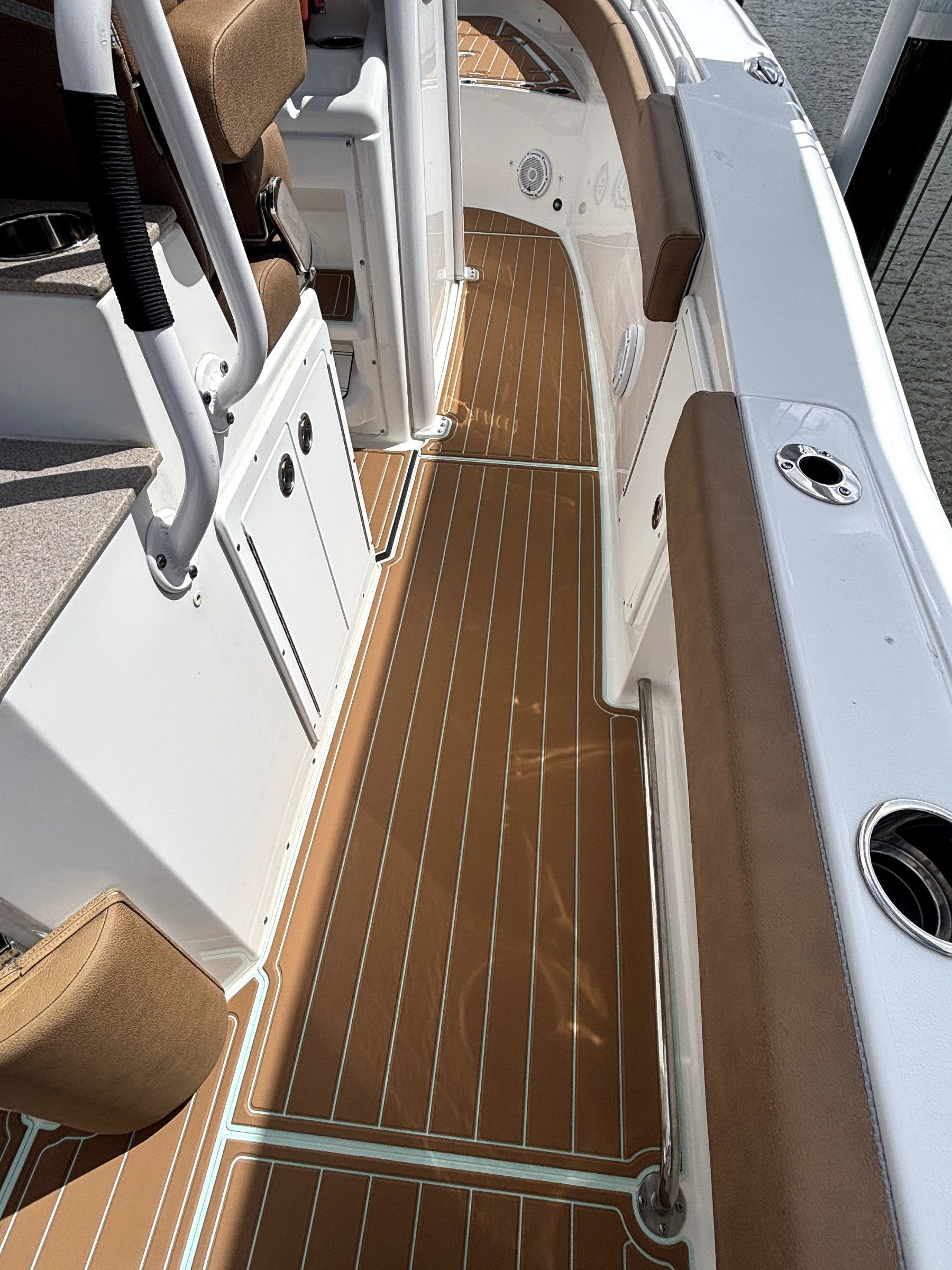
Texture choice matters here. A deeper, more aggressive pattern grips better under slime and holds a little more residue. A finer pattern cleans faster and still performs wet. On fishing boats we usually recommend the more aggressive texture in the cockpit and around the cleaning station, and the finer one on casting decks where fly line gets stripped and anything coarse becomes a snag point.
FIELD NOTE: THE FLY LINE TEST
Before committing to a texture on your front casting deck, think about what you strip line onto. A pattern deep enough to hold a wet grip under slime can also catch a fly line loop or a braid tag. Fishing boats often want two different textures on the same boat: aggressive where you fight fish, smooth where you cast. Decide it at the drawing stage, not after installation.
Cleaning a Foam Deck After a Full Day Offshore
Cleanup is a wash-down. Rinse the deck with fresh water, work it with a soft deck brush and standard boat soap, rinse again. For blood that has dried through a two-hour ride home, let the soap sit a minute before brushing. That is the entire maintenance routine.
What you do not do is equally important. No sanding. No sealing. No annual re-coat. No waxing. There is no finish layer to maintain because the color and texture are in the material itself.
Avoid acetone, bleach at full strength, and aggressive solvent cleaners. They are rarely necessary and they can affect the surface over time. For stubborn spots, a marine-grade non-abrasive cleaner handles squid ink and dried chum without any drama.
One habit worth keeping: rinse the deck the same day after an offshore trip. Not because the foam will stain, but because dried brine crystals act as a mild abrasive under foot traffic, and because the fish box drip trail is easier to deal with before it bakes.
Layout Considerations for Fishing Boat Decks
Layout is where fishing boats separate from cruisers. On a cruising boat the goal is a continuous look. On a fishing boat the goal is a deck that keeps working after you remove hatches, flood the cockpit, and drag gear.
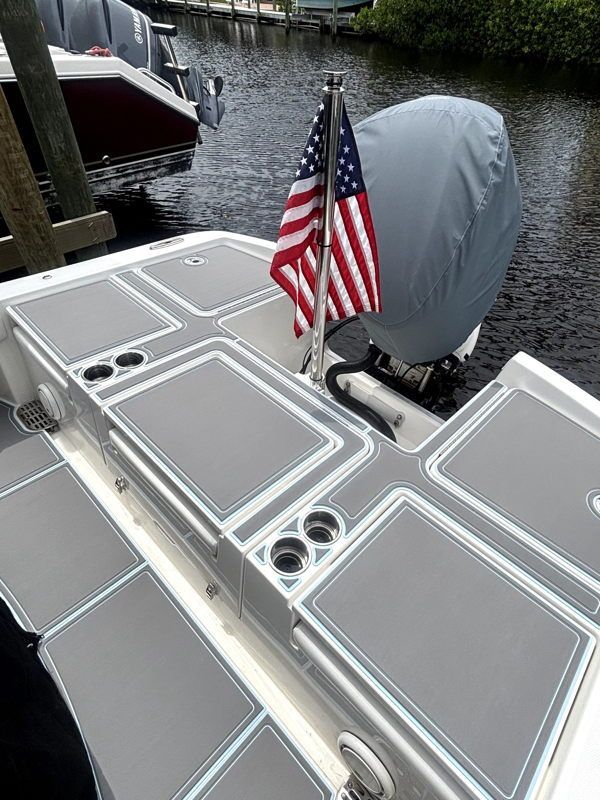
Start with hatch seams. Every fish box, livewell, and bilge access hatch gets its own cut piece so the lid opens cleanly and the seam does not get pried up by a wet hand at 5 a.m. Cutting hatches as separate pieces is standard on our fishing builds, not an upgrade.
Scupper and drain paths come next. Water needs a route to the transom drains and the deck should not fight it. We account for drain locations in the digital layout so nothing dams water in the cockpit corners where blood collects.
Then there is the cleaning station and the area under the leaning post. Those two zones take the most direct abuse on the boat. Some owners choose a darker accent there so the heaviest-use area reads consistently with the rest of the deck. Others keep it uniform. Either way, you see the decision before anything is cut.
That is the function of the Approval Drawing. The process starts with a precision digitizing tool that captures your actual deck geometry and converts it into a CAD file. You receive an electronic drawing showing the full layout, color, and pattern, including seam placement and every hatch cut, before fabrication begins. Once you approve it, the panels are cut to those exact measurements and installed with our proprietary double adhesive on non-skid surfaces. Typical time from measurement to installation runs 3 to 3.5 weeks.
Most fishing boat projects land around $3,000, with the full range running from roughly $2,500 to $10,000 and up depending on boat size and how much design customization you want. Estimates are free and available the same day, with no pre-quote measurement visit required. We are not the cheapest option and we do not take single-piece patch jobs or compete on price alone. If you want to understand what actually goes wrong with decks in this climate before you spend anything, read our breakdown of why Florida boat flooring fails.
Every season you leave carpet or worn gelcoat in a fishing cockpit, the problem compounds. Blood works further into the backing. Oxidized non-skid wears smoother in the lanes you stand in. The fix does not get cheaper, and the substrate underneath can turn a flooring job into a repair job.
All Water Customs was founded in 2016 by Andy Werner, a Naples native with 20 years in high-end construction and boating, and we have completed thousands of installs since. Every project runs the same way: digitized measurements, a CAD-built Approval Drawing you sign off on, and a written 5-Year Warranty covering Adhesive and Light Amplification handed to you before installation day.
Request a free estimate and tell us what you fish, how you fish it, and where the current deck is giving you trouble. We can give you a number the same day, without sending anyone out to measure first.
Frequently Asked Questions
Will fish blood, chum, or bait oil permanently stain foam decking?
No. The material is 100% closed-cell PE foam, which means the cell structure is sealed and there is no open pore for liquid to enter. Blood, chum, menhaden oil, squid ink, and bait juice sit on the surface instead of soaking in, and the flooring is rated 100% stain-resistant. Practically, that means a fish bleeding out on the deck during a two-hour run home is a cleanup task rather than a permanent mark. The same applies to sunscreen, bug spray, reel oil, and hydraulic fluid. Cleanup is a fresh-water rinse, a soft deck brush with standard boat soap, and a second rinse. For blood that has dried in the heat, let the soap sit for a minute before brushing. Skip acetone, full-strength bleach, and aggressive solvent cleaners; they are rarely needed and can affect the surface over time.
What does the 5-Year Warranty actually cover, and when do I get it?
The 5-Year Warranty covers two specific things by name: Adhesive and Light Amplification. Adhesive coverage matters in Florida because the daily heat cycling between a 95-degree afternoon deck and a pre-dawn run works every bond on the boat. Light Amplification refers to sunlight reflecting and concentrating on the surface, which is what leaves some decks looking chalky after a couple of seasons. We are the only company that names both of those in a warranty document. You receive that written warranty before installation day, not after the job is done, so you can read exactly what is covered before anyone touches your boat.
How long does the whole process take, and do you have to come measure before quoting?
Typical time from measurement to installation is 3 to 3.5 weeks. We do not require a pre-quote measurement visit, and estimates are free and available the same day, so you can get a number before committing to anything. Once you move forward, the process starts with a precision digitizing tool that captures your actual deck geometry and converts it to a CAD file. You then receive an electronic Approval Drawing showing the full layout, color, pattern, seam placement, and every hatch cut. Nothing is fabricated until you approve that drawing. After approval, the panels are cut to those exact measurements and installed using our proprietary double adhesive on non-skid flooring.
What does fishing boat flooring cost, and who is this not a good fit for?
Most projects land around $3,000. The full range runs from roughly $2,500 to $10,000 and up, and the variance is driven by two things: boat size and how much design customization you want. A center console cockpit with hatches cut as separate pieces sits at a different number than a larger boat with multiple zones, accent colors, and split textures between the casting deck and the cleaning station. We are not the cheapest option and we do not take single-piece patch jobs. If price alone is the deciding factor, we are probably not the right fit. If you want a deck fabricated to your boat's exact geometry with the adhesive and sun exposure covered in writing, that is the work we do.

Susan Werner is a business growth and operations executive with more than 20 years of experience leading sales, marketing, and operational performance initiatives. As VP of Operations at All Water Customs, she oversees revenue growth, digital marketing strategy, customer acquisition, sales infrastructure, business operations, and strategic product development within the marine flooring industry. Susan is recognized for building scalable systems that drive measurable growth while also leading research and development efforts in marine flooring materials, helping introduce higher-performing foam technologies that improve durability, enhance customer satisfaction, and support stronger warranty programs for both boat owners and marine flooring businesses.