How Thick Should Boat Flooring Be? Why Thicker Isn't Always Better
KEY TAKEAWAYS
- For nearly every walking surface on your boat – cockpit, casting deck, swim platform, and bow – 6MM is the right thickness and delivers the best balance of comfort, grip, and long-term performance.
- Adding 3MM to reach 9MM does not make the deck feel softer underfoot it is only a cosmetic upgrade to three colors versus two. We do offer a specialized rubber backed helm pad if clients are looking for more cushion.
- Thicker foam does not last longer. Longevity depends on material quality, adhesive performance, deck preparation, and precise measurement.
- Certain areas call for different thicknesses on purpose: 3MM for functional areas such as underneath hatches, 12MM to 16MM for bolsters and dash pads, and rubber-backed helm pads where you stand for hours.
One of the first questions boat owners ask when pricing custom marine flooring is whether they should pay for the thicker foam. It's a reasonable question, and it's built on one of the most common assumptions in the industry: that more thickness means more comfort and a longer-lasting deck. Neither is true for most of the boat. If you're researching custom boat flooring for your vessel, understanding where thickness matters and where it doesn't will save you money and give you a deck that actually performs the way you use it.
At All Water Customs, we've measured and installed marine flooring on thousands of boats across Florida since 2016. We don't pick thickness by defaulting to the biggest number. We pick it based on where the material is going and how you stand, walk, and lean on that part of the boat.
6MM Is the Standard for Almost Every Walking Surface
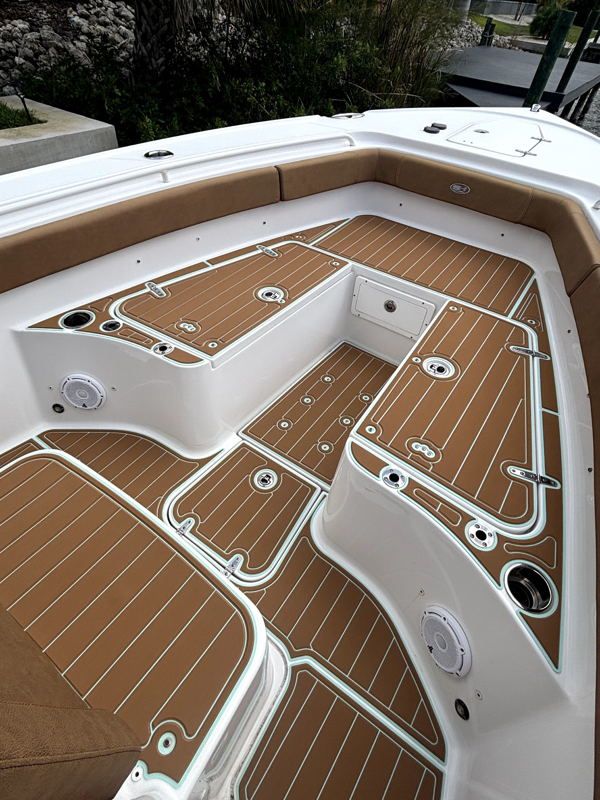
For cockpit floors, casting decks, swim platforms, bow areas, and any surface you walk across, 6MM is the correct thickness. It's what goes on the majority of our installs because it does the job across every category boat owners care about.
At 6MM, the foam is comfortable underfoot for a full day on the water. It grips wet feet without feeling sticky. It holds a clean edge and a defined pattern. And it stands up to Florida conditions: direct sun, heat cycling, salt spray, and humidity that never quits. Thicker foam does not improve any of those outcomes on a walking surface. It only adds cost.
Does 9MM Feel Softer Underfoot? No.
This surprises people. Adding 3MM to reach 9MM does not create a noticeably softer deck. Stand on a 6MM surface and a 9MM surface back to back and you will not feel a meaningful difference in walking comfort.
The softness you actually feel comes from four things, and thickness is not the main driver of any of them. Foam density determines how the material compresses under your weight. Closed-cell construction controls how it rebounds. Material quality dictates how it holds up over years, not weeks. And installation accuracy decides whether the foam sits flat and bonded across the entire deck instead of lifting at the seams.
So there's a real reason to choose 9MM, but it isn't comfort. It's design. Our 9MM material allows for a three-color pattern instead of a two-color combination, which gives the layout more depth and dimension. If you want a bolder custom look, 9MM earns its place. If your goal is a softer or more durable deck, 6MM already gives you that.
Where Extra Thickness Actually Earns Its Place
There are spots on a boat where more material solves a real problem. The point isn't to avoid thickness. It's to put it only where your body needs it.
Helm Pads
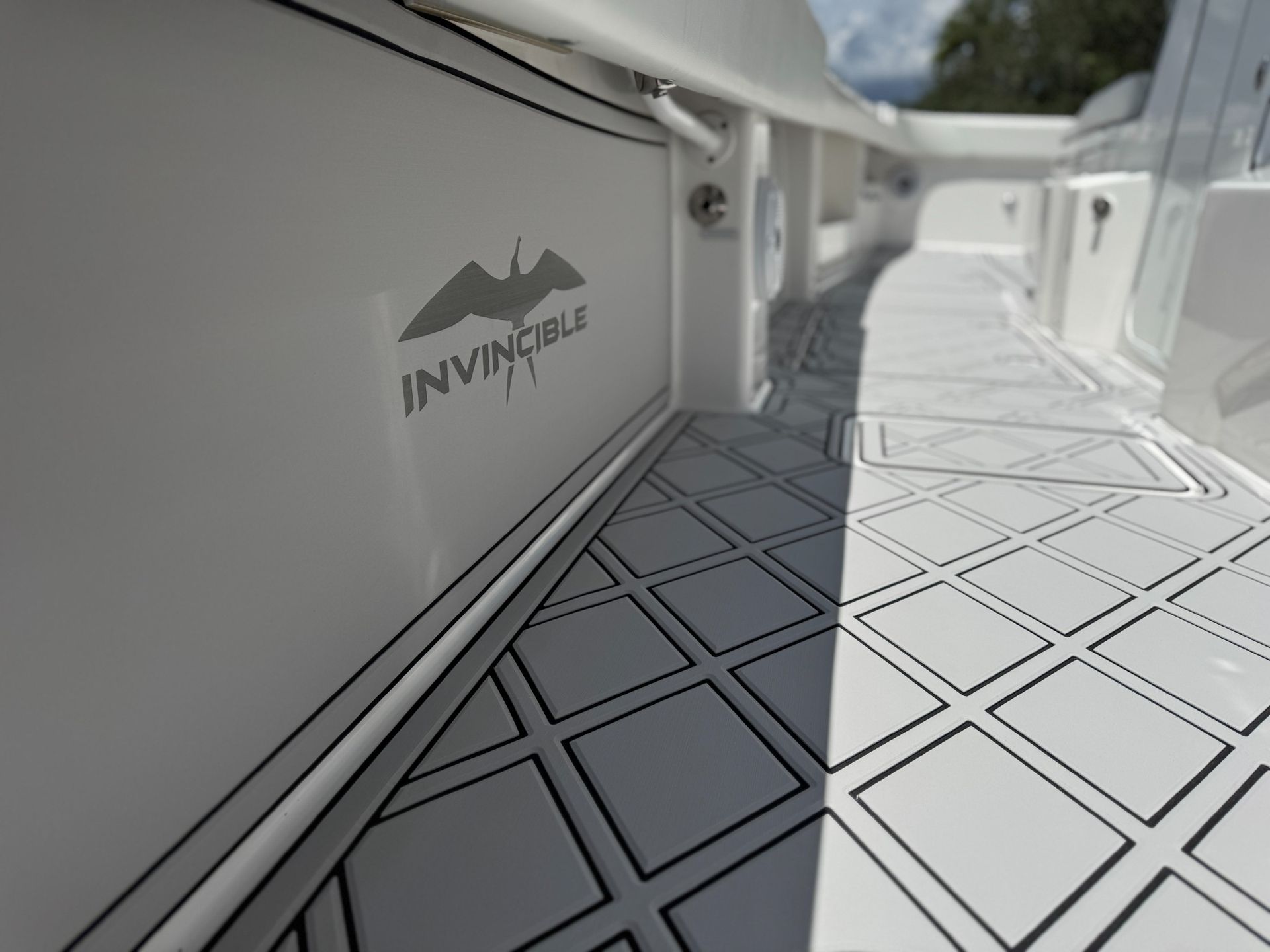
Standing at the helm for three hours is a different demand than crossing the deck to grab a rod. Rather than thickening the flooring across the whole boat to serve one standing position, we install rubber-backed helm pads that add real cushioning right where your feet live during a run. You get the support where it counts, and the rest of the boat keeps a consistent look and profile.
Hatches
Hatch lids often have tight tolerances. Add too much material and the lid binds or sits proud of the surrounding deck. For most hatches, 3MM keeps everything operating cleanly while matching the pattern around it, so the lid disappears into the layout instead of standing out.
Combing Bolsters and Dash Pads
Bolsters are lean-against and rest-against surfaces, not walking surfaces, so they call for a completely different feel. Dash pads are also where we build in creative touches like secure nooks that hold a phone in place while you're underway. For bolsters, leaning surfaces, and dash pads, 12MM to 16MM material is recommended.
Thickness Does Not Equal Durability
The idea that thicker foam lasts longer is one of the biggest myths in marine flooring. A deck fails at the bond line and at the surface, not in the middle of the foam. Piling on millimeters does nothing to prevent the two things that actually end a floor's life: lifting at the edges and material that breaks down under UV and heat.
Long-term performance depends on the parts you can't see in a thickness spec. It depends on the grade of the foam, whether it's genuinely closed-cell, how the adhesive holds through heat cycling, and how accurately the piece was measured and cut. Get those right and a 6MM floor outlasts a poorly installed thicker one every time. If you want to understand how different foam decking materials actually compare, this breakdown of foam boat decking differences lays out what separates materials that hold up from ones that don't.
We use 100% closed-cell PE foam, chosen specifically for how it handles Florida's marine environment: stain resistance against fish blood and sunscreen, structural stability under a hot sun, and colors that are heat-infused into the material rather than printed on top. Our non-skid flooring is set with a proprietary double adhesive so the bond survives the exact heat cycling that lifts lesser installs.
Matching Thickness to Each Area of the Boat
Every boat gets used differently, so we recommend thickness by application rather than defaulting to the thickest option available. Here's how it typically breaks down.
- Cockpit Floors: 6MM
- Casting Decks: 6MM
- Swim Platforms: 6MM
- Bow Areas: 6MM
- Hatches: 3MM
- Helm Pads: 6MM with rubber backing
- Combing Bolsters: 12MM to 16MM
- Dash Pads: 12MM to 16MM
This is the part where a lot of buyers get pushed toward one blanket thickness for the whole boat because it's simpler to quote. It's not simpler to live with. A deck built this way feels right in every zone because each zone was measured and specified for how you use it.
How We Measure and Build It
Accuracy is what makes application-specific thickness work. The process starts with a precision digitizing tool that captures the exact geometry of your deck and turns it into a CAD file. Before we cut anything, you receive an electronic Approval Drawing showing the full layout, colors, and pattern, so you sign off on the design before fabrication begins. From there the flooring is CNC-cut in the U.S. to your exact measurements.
Pricing runs from roughly $2,500 to $10,000 or more depending on boat size and how customized the design is, with most projects landing around $3,000. Same-day estimates are available and there's no separate measurement visit required before you get a number. Typical timeline from measurement to installation is 3 to 3.5 weeks, and you receive a written warranty before we install. We're a shop for owners who want the material and the fit right, not for single-piece patch jobs or price-shopping.
Frequently Asked Questions
Should I pay for the thicker 9MM foam to get a more comfortable deck?
For walking surfaces, no. Stand on 6MM and 9MM back to back and you won't feel a meaningful difference in comfort. The softness you actually feel comes from foam density, closed-cell construction, material quality, and how flat and bonded the install sits, not from raw thickness. The real reason to choose 9MM is design: our 9MM material allows a three-color pattern instead of a two-color combination, which gives the layout more depth. If your goal is a bolder custom look, 9MM earns its place. If your goal is comfort or durability, 6MM already delivers that.
Does thicker foam last longer on the water?
No. A deck fails at the bond line and at the surface, not in the middle of the foam, so adding millimeters does nothing to prevent lifting at the edges or color breakdown under UV. Longevity depends on the grade of the foam, whether it is genuinely closed-cell, how the adhesive holds through heat cycling, how carefully the deck was prepped, and how accurately the piece was measured and cut. We use 100% closed-cell PE foam and a proprietary adhesive chosen specifically for Florida sun, heat cycling, salt, and humidity. A well-installed 6MM floor outlasts a poorly installed thicker one every time.
Which thicknesses do you recommend for different parts of my boat?
We spec by application rather than defaulting to one blanket thickness. Cockpit floors, casting decks, swim platforms, and bow areas use 6MM. Hatches with tight tolerances use 3MM so the lid clears and sits flush. Helm pads are 6MM with rubber backing to add cushion where you stand for hours. Combing bolsters and dash pads use 12MM to 16MM. Building it this way means each zone feels right for how you actually use it.
What does your warranty cover, and how does the process work before installation?
You receive a written 5-Year Warranty. Amongst many covered items, we are the only company to include coverage on Adhesive and Light Amplification. Our process starts with a precision digitizing tool that captures your deck geometry and turns it into a CAD file. Before anything is cut, you get an electronic Approval Drawing showing the full layout, colors, and pattern to sign off on. The flooring is then CNC-cut in the U.S. to your exact measurements. Same-day estimates are available with no separate measurement visit required, and typical timeline from measurement to installation is 3 to 3.5 weeks.

Susan Werner is a business growth and operations executive with more than 20 years of experience leading sales, marketing, and operational performance initiatives. As VP of Operations at All Water Customs, she oversees revenue growth, digital marketing strategy, customer acquisition, sales infrastructure, business operations, and strategic product development within the marine flooring industry. Susan is recognized for building scalable systems that drive measurable growth while also leading research and development efforts in marine flooring materials, helping introduce higher-performing foam technologies that improve durability, enhance customer satisfaction, and support stronger warranty programs for both boat owners and marine flooring businesses.