Color Bleeding - Why Some Marine Foam Transfers Color and How to Avoid It
KEY TAKEAWAYS
- Color transfer happens when a marine foam's pigments are not locked into the material and start migrating to the surface under UV and heat. It is one of the first visible signs the flooring is breaking down.
- Once foam begins bleeding color, no cleaning product will restore it. Replacement is the realistic fix.
- The failure usually traces back to lower-grade EVA foam and cheaper pigments that were never built for Florida sun and heat cycling.
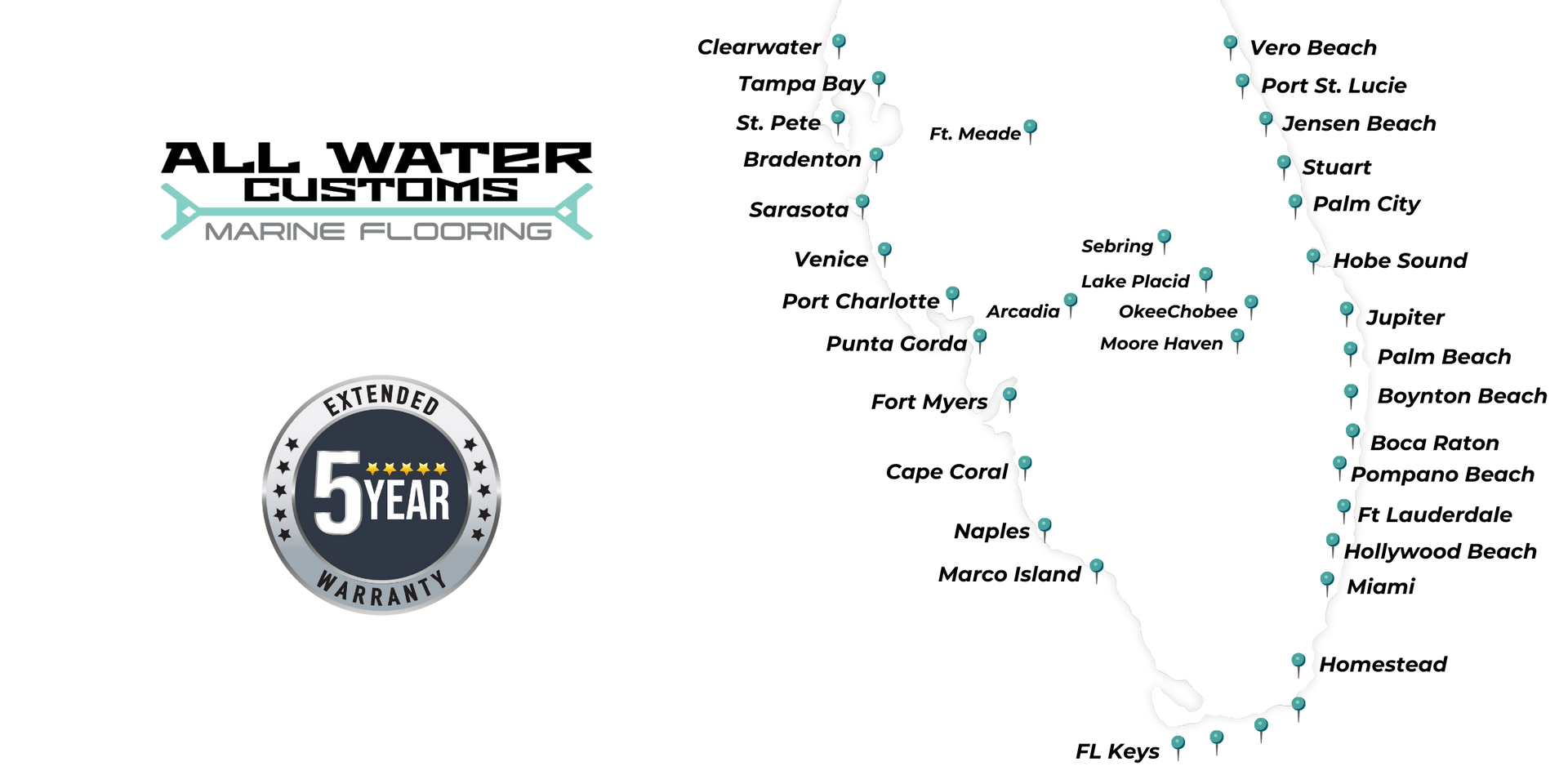
- 100% closed-cell PE foam with heat-infused color holds its appearance far longer, which is why All Water Customs backs every install with a 5-Year Warranty covering Adhesive and Light Amplification.
Marine foam that transfers color is foam whose pigment has started leaving the material and ending up on your feet, clothes, towels, and upholstery. If your boat flooring is rubbing off on everything it touches, the material is deteriorating, and understanding why can keep you from paying for the same job twice. Good foam boat decking should stay where it belongs: on the deck.
At All Water Customs, we use 100% closed-cell PE marine foam with heat-infused color, chosen specifically for the conditions boats face in Florida. Over more than a decade and thousands of installs, we have had clients remove hundreds of failed floors across the state (those that chose an EVA foam), and color transfer is one of the most common complaints we hear about other foams.
Color Transfer Is a Sign Your Boat Flooring Is Failing
You step off the boat after a good day on the water and notice color marks on the soles of your feet. Your white shorts have picked up stains. The towel you left on the deck has color on it. The dog's paws look dirty for no reason. That is the flooring telling you something.
Marine flooring should not leave its color behind. When foam starts depositing pigment onto skin, clothing, towels, or gear, it is often the first visible sign the material is breaking down under UV exposure, deck heat, and daily use.
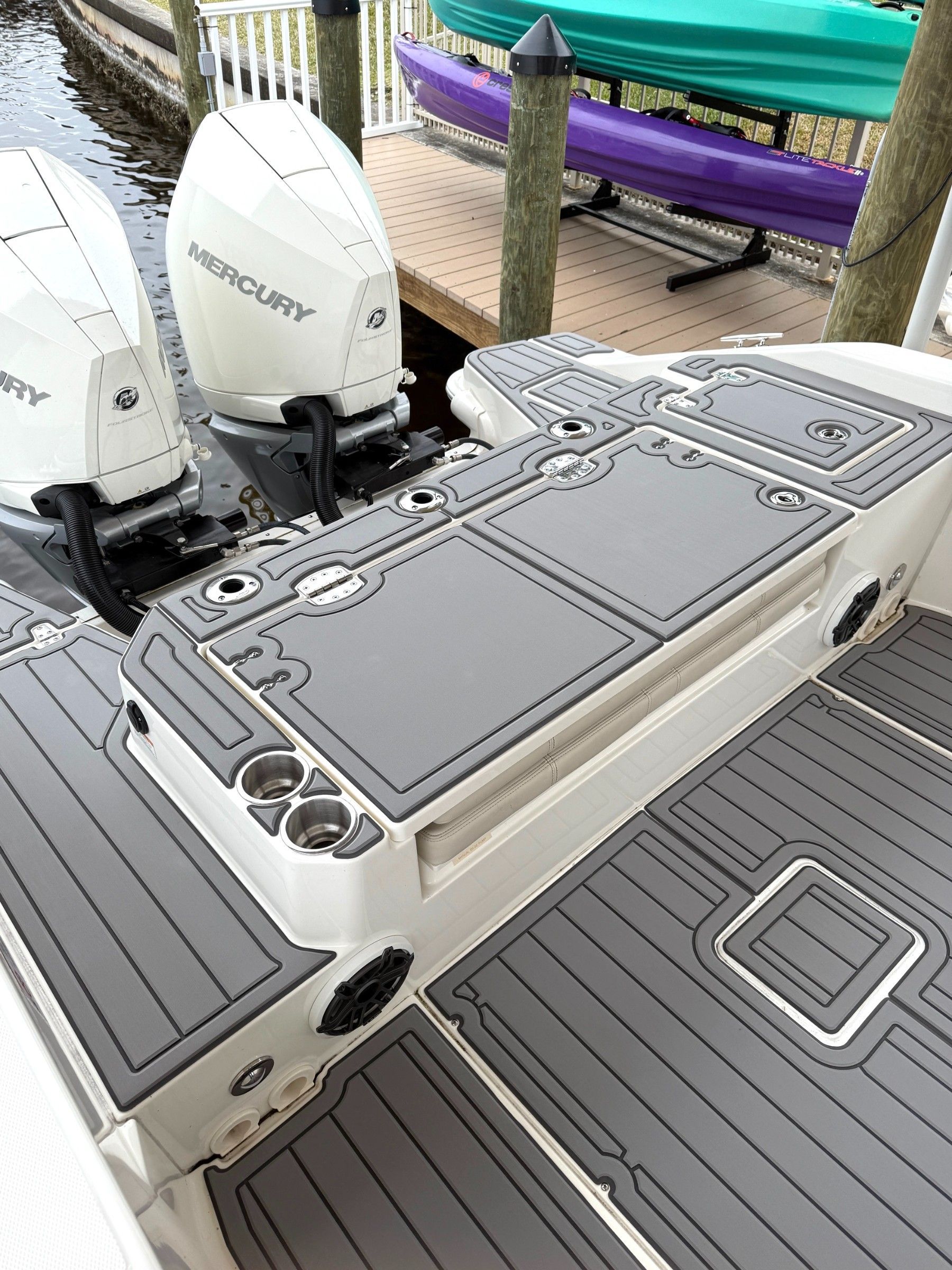
We have replaced hundreds of failed boat floors throughout Florida, and the sentence we hear most is some version of "my flooring is rubbing off on everything." That is not normal wear, and it is not something you should have to work around for the life of the boat.
The visible results stack up quickly: dirty feet, stained clothing, discolored towels, a faded look across the deck, and flooring that reads years older than it actually is.
Color Transfer Is Often the First Symptom, Not the Only One
Color bleeding rarely shows up alone. It is usually the leading edge of a longer decline. As the material keeps aging, boat owners tend to notice more than one problem at once.
Along with the pigment transfer, the foam often starts fading, developing a chalky residue, showing surface wear, and lifting at the edges. The floor may still be attached to the deck, but its performance is already on the way down. Catching the color transfer early tells you where the material is headed.
Why It Actually Happens
Several specific factors drive color transfer, and none of them are random.
Inferior pigments. Not all marine foam uses color pigments built to survive years of UV. Cheaper materials often use pigments that were never rated for long outdoor exposure, so as the foam weathers, the color migrates to the surface instead of staying in the material. This is the difference between color that sits on the foam and color that is heat-infused into it.
Constant UV exposure. Florida sun does not let up. Decks sit in direct sunlight for hours, and that exposure accelerates oxidation and material aging. As the surface breaks down, transfer becomes far more likely.
Heat cycling. A deck can exceed 140°F in summer, then cool sharply overnight. That daily expansion and contraction stresses lower-quality material over and over, and repeated stress ages it early.
Lower-grade formulations. Foam is not one thing. Lower-density and lower-grade EVA formulations have a harder time holding their look under sun, humidity, and heat, and the end state is fading, oxidation, and eventually the color ending up on you.
The material choice here matters more than most buyers expect, and the difference between EVA and PE is at the center of it. We break that down in detail in this comparison of PE foam versus EVA foam boat decking in Florida, which covers why the two materials behave so differently under the same sun.
AWC INSIGHT
Heat-infused color is not a finishing step applied on top of the foam. The pigment is worked into the closed-cell PE material itself, so there is no surface layer to wear off, chalk, or migrate onto your feet. That single manufacturing difference is why a floor holds its color through years of Florida sun instead of surrendering it one towel at a time.
Paying Twice Is the Expensive Part
The most common misconception in marine flooring is that the least expensive option saves money. For a lot of boat owners, the opposite turns out to be true, because when a cheap floor fails, you pay for the project a second time.
That second bill is not just new flooring. It includes removing the failed material, scraping and cleaning off the old adhesive, prepping the surface again, buying the replacement, and going without your boat while all of that happens. The option that looked cheapest at the start often ends up costing the most across the life of the boat.

Most of the projects we handle land around $3,000, with a broader range from roughly $2,500 to $10,000 depending on boat size and how custom the design is. That is not the bottom of the market, and it is not meant to be. It is what honest material and a precise install cost once, so you are not budgeting for the same floor twice.
How AWC Approaches Marine Flooring Differently
We have spent more than ten years refining the materials and the process specifically for Florida boating, and the choices are deliberate rather than decorative.
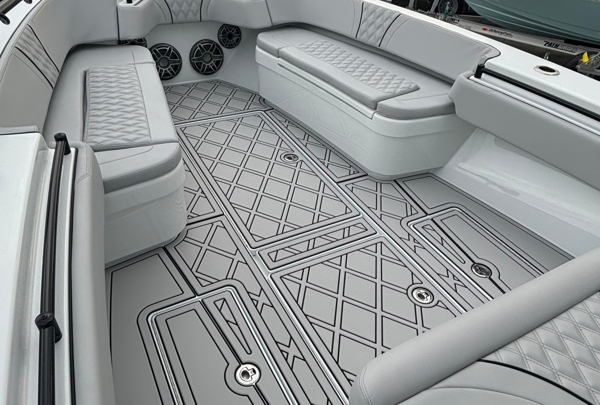
We use 100% closed-cell PE foam because of how it holds up where it counts: color stability under heat-infused pigment, performance in extreme deck temperatures, 100% stain resistance, easy cleaning, cushion underfoot, and grip that lasts. The point is not how good it looks the day we install it. The point is how it looks several seasons later.
The process is built for accuracy from the first step. We start with a precision digitizing tool that captures your deck geometry and converts it into a CAD file. You receive an electronic Approval Drawing showing the full layout, color, and pattern before anything is fabricated. The flooring is then CNC-cut in the U.S. to your exact measurements, and it is set with a proprietary adhesive on the non-skid flooring so the bond holds.
Every client gets a written warranty for their installation, and that warranty covers Adhesive and Light Amplification by name. We are the only company covering both. There is no open-ended language and no fine print promising the world: it states what it protects, for five years.
Your Boat Should Not End Up on Your Clothes
Flooring should make time on the water better, not add a maintenance problem you have to manage every trip. If your current floor is marking your feet, staining clothing, or looking noticeably faded, those are signals the material is already breaking down, and it usually gets worse from there rather than better.
Choosing 100% closed-cell PE foam over EVA from the start protects the money you put in, keeps the replacement cycle from repeating, and holds the deck's look season after season under the same sun that wore out the last floor.
Handle It Before It Spreads
Color transfer does not reverse itself, and every month of UV and heat cycling takes the material further down. Replacing a failing floor now, before the fading and edge lifting spread, means one decision instead of a running problem you keep cleaning up after.
We can give you a same-day estimate with no pre-quote measurement visit required, and estimates are free. After more than a decade measuring nearly every make and model on Florida water, we can get you an dialed in estimate quickly. Request your free estimate, we will then schedule measure and send an Approval Drawing with your layout, color, and pattern before anything is cut, so you know exactly what you are getting before fabrication begins.
Frequently Asked Questions
Is it normal for boat flooring to stain your feet or clothes?
No. Marine flooring should hold its color throughout normal use. When you notice color transferring to your feet, clothing, towels, or gear, it is usually a sign that lower-grade EVA foam is breaking down under UV and heat. The pigment was never fully locked into the material, so as the foam ages it migrates to the surface and ends up on whatever touches it. We use 100% closed-cell PE foam with heat-infused color, where the pigment is worked into the material itself rather than sitting on top, so there is no surface layer to wear off onto you.
Why is my boat flooring fading?
Fading usually traces back to prolonged UV exposure, deck heat, oxidation, and lower-grade EVA foam formulations that were never rated for long-term outdoor marine use. In Florida, decks sit in direct sun for hours and can pass 140°F in summer before cooling overnight, and that constant heat cycling accelerates the aging of cheaper material. Once the surface starts breaking down, fading and color transfer tend to show up together.
Can faded or color-transferring boat flooring be restored?
No. Once the material begins breaking down, cleaning products will not bring back the original color or stop the pigment from transferring. The damage is in the material itself, not on top of it. In most cases replacement is the realistic long-term fix. If you replace it, choosing 100% closed-cell PE foam over EVA from the start keeps you from cycling through the same failure again.
What does your warranty cover, and how do I know I am getting it in writing?
Our 5-Year Warranty covers Adhesive and Light Amplification by name, and we are the only company covering both. There is no open-ended language or fine print promising more than it delivers: it states what it protects, for five years. Every client receives a written warranty for their installation, so you know exactly what is covered before any work begins. Estimates are free and available same-day with no pre-quote measurement visit required.

Susan Werner is a business growth and operations executive with more than 20 years of experience leading sales, marketing, and operational performance initiatives. As VP of Operations at All Water Customs, she oversees revenue growth, digital marketing strategy, customer acquisition, sales infrastructure, business operations, and strategic product development within the marine flooring industry. Susan is recognized for building scalable systems that drive measurable growth while also leading research and development efforts in marine flooring materials, helping introduce higher-performing foam technologies that improve durability, enhance customer satisfaction, and support stronger warranty programs for both boat owners and marine flooring businesses.