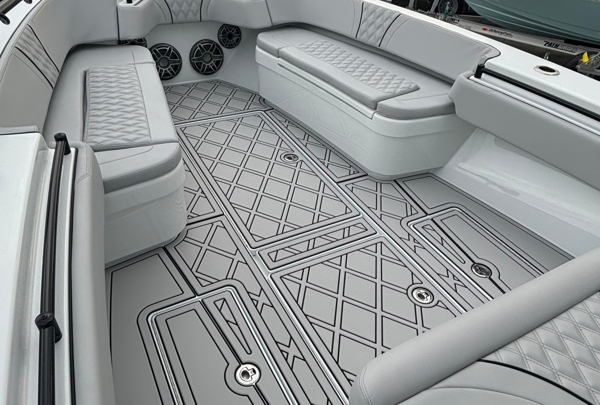
Closed Cell vs. Open Cell Foam for Boats: Why It Matters
KEY TAKEAWAYS
- Closed-cell PE foam has sealed cells that salt water and stains cannot enter, while open-cell foam has interconnected pockets that absorb liquid and hold it.
- Open-cell foam (EVA) fails in Florida conditions through staining, water retention, and faster UV breakdown because liquid sits inside the material instead of beading on top.
- All Water Customs builds decks from 100% closed-cell PE foam that is fully stain resistant, and backs the install with a 5-year warranty covering light amplification and adhesive.
- Before buying any boat flooring, ask the installer to name the foam cell type and what their warranty actually covers in writing. Coverage on Light Amplification and Adhesive is a must.
Foam cell structure is the single fact that decides whether your boat flooring stains, holds salt water, and fades early; or stays clean for years. Most foam comparison guides skip this entirely and talk about color and texture. The thing that matters most is invisible: whether the foam is closed-cell or open-cell. That structure determines how the material behaves the first time salt spray, fish blood, sunscreen, or spilled bait lands on it. If you are researching marine boat flooring built for Florida heat, this is the detail worth understanding before you spend a dollar.
We have spent over 10 years testing marine flooring against Florida sun, salt, and daily use. The pattern is consistent. Decks that absorb liquid eventually look it. Decks that block liquid at the surface clean up with a hose. Here is the science behind why, and the questions to ask before you commit.
What cell structure actually means in marine foam
Cell structure describes how the tiny pockets inside the foam are built. In closed-cell foam, each pocket is fully sealed and filled with gas, with walls that do not connect to neighboring cells. In open-cell foam, those pockets are interconnected and open to one another, like a sponge. That single difference controls everything that happens when liquid hits the surface.
Closed-cell PE foam, the material we use for every deck, does not let water travel into the material. The sealed cells stop liquid at the top layer. Open-cell foam does the opposite. Its connected pockets pull liquid inward and hold it, the same way a kitchen sponge soaks up a spill. On land that might not matter much. On a boat in saltwater, surrounded by sun and constant moisture, it decides how long your deck looks right.
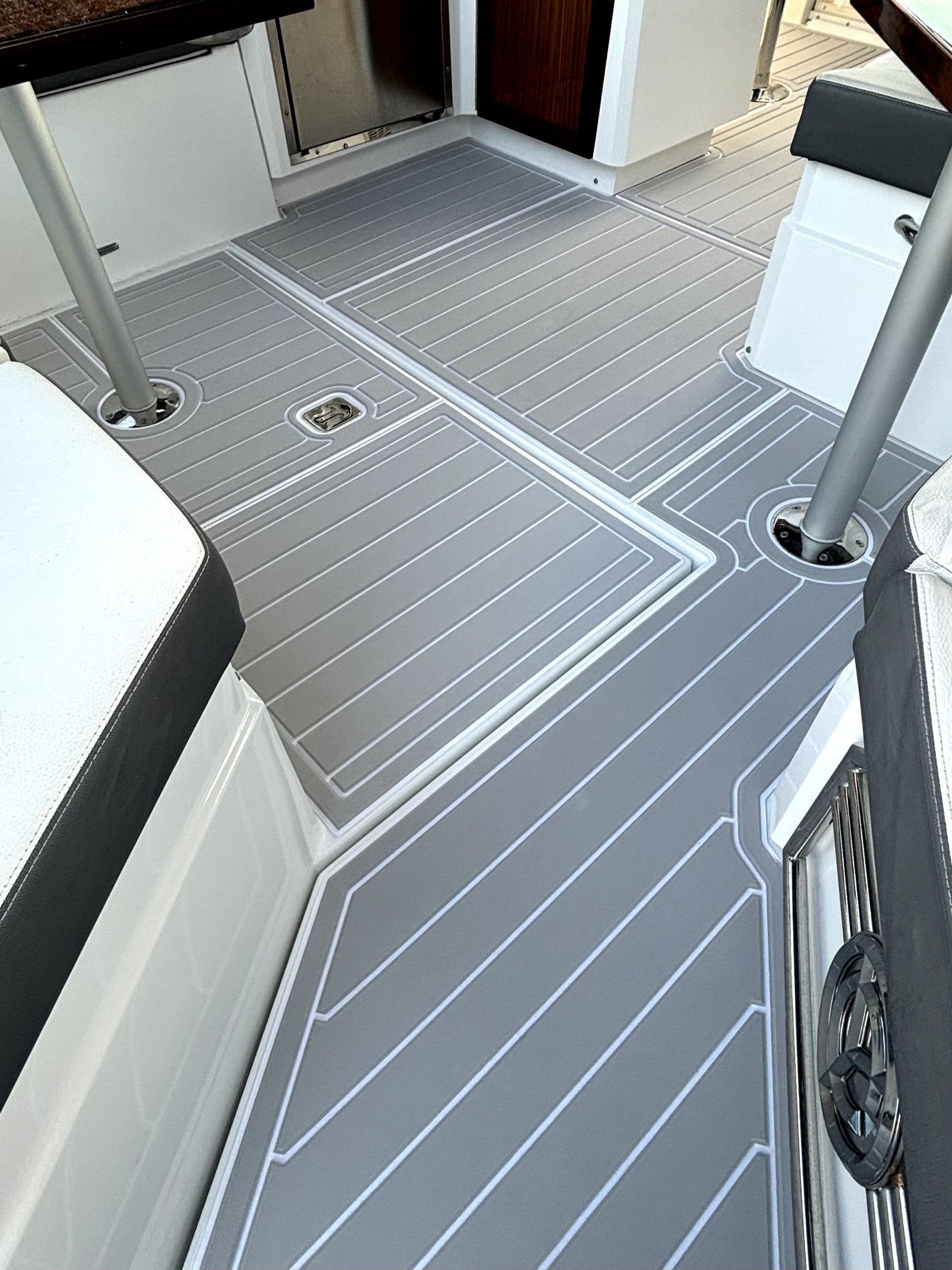
This is why the foam cell type is the first thing to settle. A deck can look identical to another on day one and behave completely differently on day two hundred. The texture you feel underfoot tells you nothing about the structure underneath. You have to ask.
How salt water interacts with open-cell foam
Salt water moves into open-cell foam and stays there. Because the cells are interconnected, every wave of spray, every wet towel, every rinse cycle pushes saltwater deeper into the material. As the water evaporates, salt crystals are left behind inside the foam. Those crystals do not leave when you wipe the surface. They build up below it.
That trapped salt creates a few specific problems. The foam stays damp longer, which encourages staining and odor. The retained moisture and salt accelerate breakdown from the inside, so the deck degrades faster than its surface appearance suggests. And the adhesive bond underneath is working against constant moisture, which is a leading cause of lifting edges over time.
None of this shows up in a showroom. It shows up in year two, when the deck that looked fine starts holding stains you cannot scrub out and corners begin to lift. By then the cost is a full replacement, not a cleaning. This is the difference between buying once and buying again, which is the real expense most people miss when they shop on sticker price alone.
Why closed-cell PE foam blocks stains completely
Closed-cell PE foam blocks stains because liquid never gets inside the material. The sealed cell walls mean fish blood, sunscreen, spilled drinks, and salt spray sit on the surface instead of soaking in. There is no interior pocket for a stain to settle into, which is why our decks are 100 percent stain resistant rather than stain resistant up to a point.
This is also why closed-cell PE holds up better under Florida sun. UV exposure and light amplification break foam down over time, and our 5-year warranty specifically covers light amplification along with adhesive performance. We name those two failure modes because they are the ones that actually end a deck's life: the sun working on the material from above, and the bond failing from below.
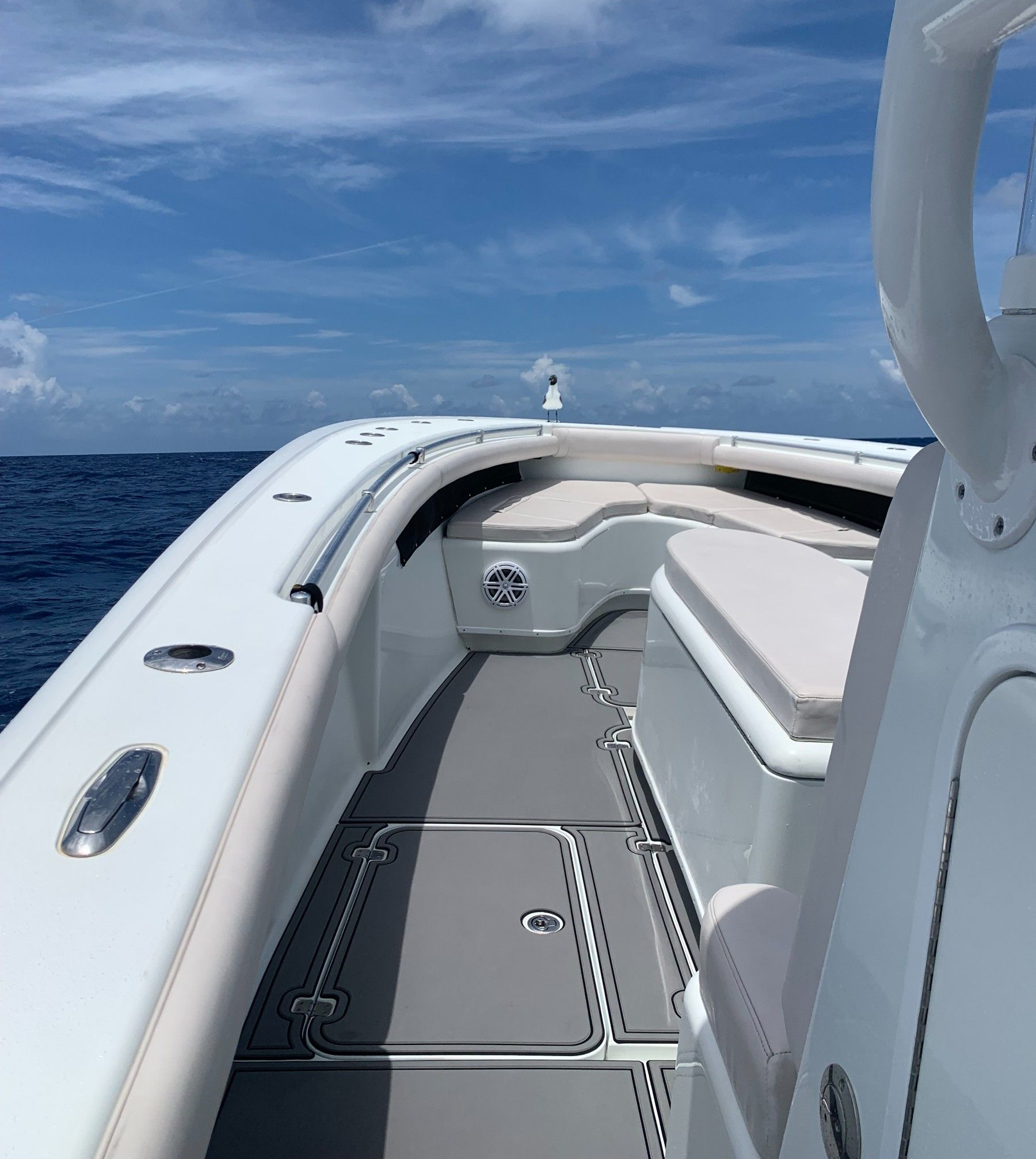
If you want to see how this plays out across different boat layouts, our range of custom foam deck patterns shows how closed-cell PE handles real cockpit shapes, casting decks, and step areas without giving liquid a path inside. The pattern is the look. The closed-cell structure is the reason the look lasts.
Cleaning and maintenance differences you will actually notice
The maintenance gap is the part you live with every weekend. A closed-cell PE deck cleans with fresh water and a soft brush because the dirt, salt, and stains never penetrated the surface. Rinse it down after a day on the water and it comes back to clean. There is no deep cleaning ritual because there is no depth for grime to reach.
Open-cell EVA flooring is the opposite kind of chore. Because liquid and salt are held inside, surface cleaning only addresses what you can see. The trapped material keeps working on the foam, so stains reappear, color dulls unevenly, and the deck never quite looks rinsed even right after you rinse it. Over a few Florida summers, that adds up to a tired-looking deck and a replacement conversation.
This is the total-cost-of-ownership point that matters more than the first quote. A deck you clean with a hose and keep for 8-plus years costs less over its life than a cheaper deck you scrub constantly and replace early. We build for the long version on purpose. If you want the direct material comparison, our breakdown of PE foam versus EVA foam for Florida boats covers how the two materials hold up against sun, salt, and daily wear.
What to ask about foam type before you buy
Before you sign anything, get three answers in plain language. First, ask whether the foam is closed-cell 100% or open-cell, and get it in writing. A shop that builds with closed-cell PE will tell you directly. A vague answer is an answer.
Second, ask exactly what the warranty covers, by name. Many warranties sound generous and cover almost nothing you would ever claim. Ours covers light amplification and adhesive. These are the two failure modes that actually retire a deck. Ask the other shop to name what theirs covers and watch how specific the answer gets.
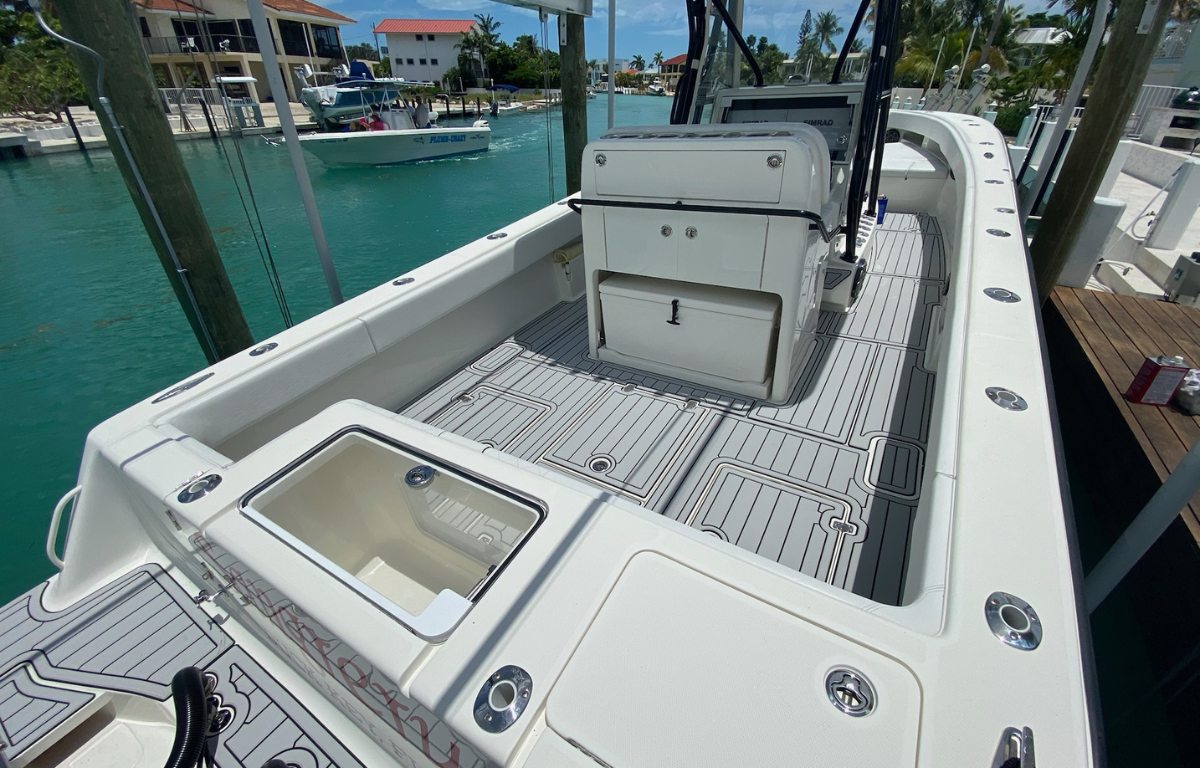
Those questions separate a deck built to last from one built to look good in a photo. The foam cell structure is the part no one can see and the part that decides everything, which is exactly why an honest shop will lead with it instead of avoiding it.
Waiting until your current deck stains or lifts means paying for the same job twice – once for the foam that absorbed everything, and again for the replacement. Settling the foam cell question now, before salt and sun do their work, is the difference between one deck for 8-plus years and a recurring expense. Closed-cell PE foam is the material that makes that long version possible, and a warranty that names light amplification and adhesive is how you confirm a shop stands on the same fact.
Tell us your boat and how you use it, and we will give you a same-day estimate without an on-site measurement, then schedule your measurement to start your project. Request your free estimate from All Water Customs and start with the question most shops hope you never ask: closed-cell or open-cell.
Frequently Asked Questions
How do I tell if a boat deck is made of closed-cell or open-cell foam?
You usually cannot tell by looking or touching, which is why you have to ask the installer directly and get the answer in writing. Two decks can feel nearly identical the day they are installed and behave completely differently a year later. The simplest test of an honest answer is specificity: a shop building with closed-cell PE foam will say so plainly and explain that salt and stains stay on the surface. A vague reply is itself an answer. We at AWC build every deck from 100 percent closed-cell PE foam, so liquid never gets inside the material.
Why does foam cell structure matter so much in Florida specifically?
Florida combines constant salt exposure, daily moisture, and intense UV, and all three work against open-cell foam at once. Because open-cell foam pulls liquid into its connected pockets, salt water moves inside and leaves crystals behind as it evaporates, the foam stays damp longer, and trapped moisture works against the adhesive bond, which leads to staining and lifting edges over time. Closed-cell PE foam blocks liquid at the surface so it beads up and rinses off. We have over 10 years of testing marine flooring against Florida sun and salt, and the pattern is consistent: decks that absorb liquid eventually show it.
What does your warranty actually cover, and for how long?
Our 5-year warranty covers light amplification and adhesive performance by name; with additional coverages. We call out those two specifically because they are the failure modes that actually end a deck's life: UV and light amplification breaking the foam down from above, and the adhesive bond failing from below, which causes lifting. We use a double adhesive on non-skid boats to hold the flooring in place against that second failure. Average lifespan runs 8-plus years. We name what is covered rather than describing the warranty in general terms, and we encourage you to ask any shop to do the same.
How long does a project take and what does it cost?
Projects run roughly 3 to 3.5 weeks from the first measurement to the finished deck. Pricing variance comes from boat size, layout complexity, and how customized the design is. We can give you a same-day estimate without an on-site visit, when ready to start your project, we then come out to measure. You will receive full drawings of your project to review and revise before approving for fabrication.
The AWC Difference
Since 2016, All Water Customs has helped thousands of Florida boat owners upgrade their boats with custom marine flooring built for real-world conditions.
When you choose AWC, you're choosing:
- Over 10 years of marine flooring experience
- Premium close-cell PE foam
- 100% stain-resistant material
- Built for Florida's extreme heat
- 5-Year Warranty covering Adhesive & Light Amplification
Because great marine flooring isn't just about how it looks. It's about how it performs.